
September 23, 2026
Best AI Automation Consultant for Production LLM Systems
Most "AI consultants" ship demos, not systems that survive a 3 a.m. incident with retries, evals, cost caps, and observability. I help founders and teams
First-person essays on AI automation, GenAI/LLM engineering, cloud architecture and building autonomous systems, by Lazar Milicevic.
Most "AI consultants" ship demos, not systems that survive a 3 a.m. incident with retries, evals, cost caps, and observability. I help founders and teams
I killed an autonomous agent after six weeks and replaced it with a state machine calling an LLM at four steps, quality rose, cost dropped 70%, and the 3
I’ve found non-coders can build useful, supervised AI workflows when tasks are narrow and permissions limited. Production agents need engineering

I build first AI agents as narrow, controlled tool-use loops: the model proposes actions while my code enforces permissions, state, timeouts, logs, and
Next-gen automation for solo founders isn't a giant agent or a Zapier maze, it's four boring layers: event bus, specialized agents, hybrid-search memory

Hiring an AI implementation consultant means finding someone who owns the full stack, evals, numbers, and handover, not a prototyper who ships demos

Proximity is usually the wrong first filter for AI automation work, most of it lives in APIs, cloud consoles, and dashboards that don't get faster because

I land remote AI automation work in 2026 by positioning around specific workflows I remove from a business, not the tools I use, and by showing three deep

Most "AI automation agency" proposals overprice work that won't survive six months, so before hiring, define your workflow in numbers, insist on a

I'm the AI implementation consultant who takes ideas from whiteboard to shipped, monitored systems non-engineers can trust, owning discovery

I evaluate custom AI agent dev shops by how they scope before selling: serious teams refuse fixed quotes on vague briefs, separate PoC from production

I study five LangChain repos for observable state, bounded tools, inspectable retrieval, evaluation, and deployable workflows, not star counts or demos

I compare four learning paths: two DeepLearning.AI courses for LangChain basics and RAG, LangChain Academy for stateful agents, and Hugging Face for

I reviewed Tai Lopez's AI Automation Consultant program after a decade building production automation systems, and found its sales and no-code basics

LangChain is great for prototyping RAG and swapping providers, but I strip it out of business-critical paths and rely on typed LCEL chains, hybrid search
I built a six-criteria rubric, integration depth, evals and observability, infra fluency, prompt engineering, delivery discipline, and post-launch ops, to
I scope sovereign AI PoCs by splitting workloads into three tiers, local open-weight models for sensitive data, regional hyperscaler endpoints for
Hiring AI engineers in Dubai Silicon Oasis works best when you sponsor visas directly, tap the Academic City pipeline, and pitch the tax-free net pay. I

I've spent years shipping GenAI systems for founders, and analyst decks get the big picture right on portfolios, data readiness, and governance but skip
A practical guide to hiring GenAI consultants: know which of the four things you're actually buying (advisory, PoC, MVP, or fractional), and match the

BizFlowAI runs on three revenue streams, build projects, retainers, and productized systems, and hits 55-70% margins only by reusing infrastructure
AI proofs-of-concept usually stall for organizational reasons, not model quality: undefined success metrics, unresolved data access, wrong deployment
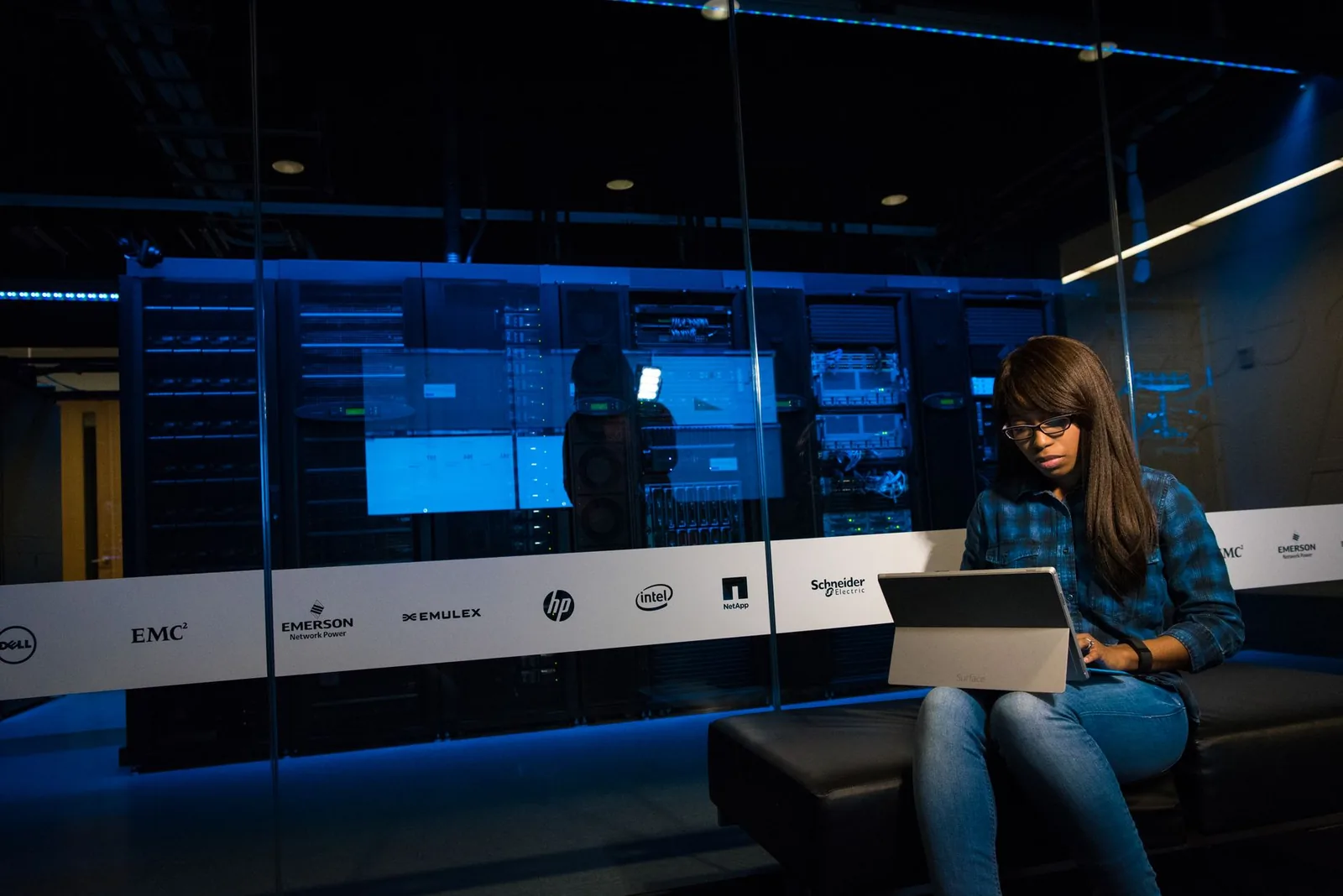
Andrew Ng's LangChain courses get you to a demo, but shipping to paying customers means handling retries, multi-provider fallbacks, per-tenant cost caps
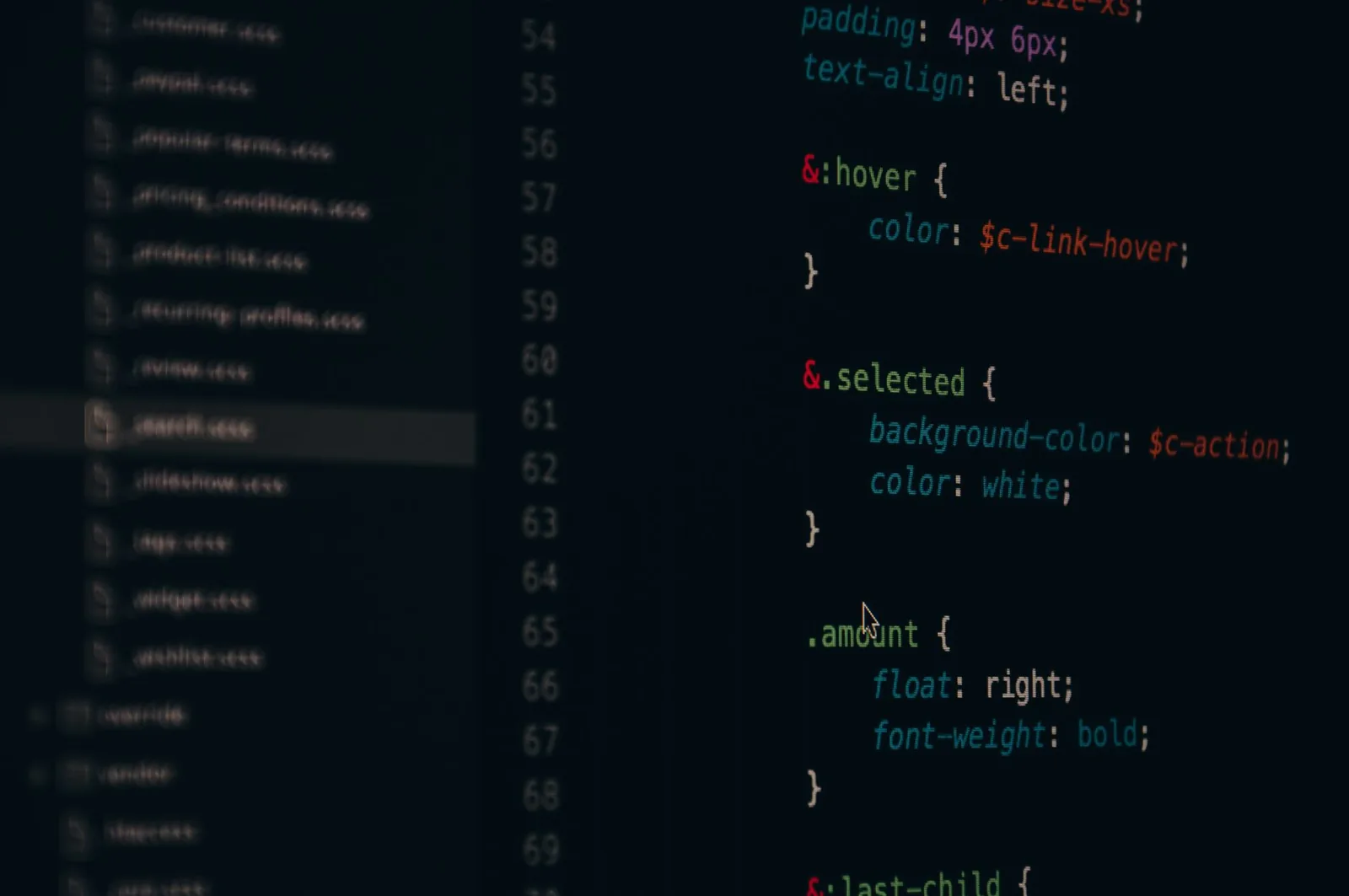
DeepLearning.AI's LangChain courses nail the fundamentals, but stop where demos end and production begins. Drawing on two years of shipping RAG systems

I build Business Central agents around one bounded, auditable decision, starting with read-only analysis or approval-ready drafts instead of broad ERP
A founder asked me for grant help nine days before deadline with a technical section full of buzzwords; we rewrote it like engineers and made the

I run AI PoCs as the first honest version of the production system, not demos: real infra, real data, and an evaluation harness with hard numbers from day

I scope AI automation by isolating one costly workflow, mapping triggers, data, actions, human review, and measurable success before choosing tools. In 30
I built four production systems, a multi-agent content engine, a sovereign local-LLM RAG POC, and a serverless Zendesk SLA pipeline, and share which

Founders often buy the wrong shape of AI help: strategy decks when they needed shipped code, or cheap builds when they needed real engineering. I use four

I ship AI automation systems and track every build's real costs and returns in a spreadsheet; across my last five, three were strong wins (content engine

Most of my AI integration work is data plumbing, not prompting: I map where data actually lives, find the ugliest system (usually the real source of

I run a production SEO workflow where specialized agents research, write, validate, and publish with strict permissions. Durable job records, versioning
I built a sovereign AI POC where no document, embedding, or model weight leaves the customer's network, using self-hosted Llama/Qwen models (32B-70B)
I run hybrid search on Postgres 16 with pgvector and tsvector across 1,115 posts, fusing results via Reciprocal Rank Fusion (k=60) because pure vector

Across seven production sites, Gemini mentioned my brands 13 times in 32 prompts and recommended them 14 times, while Claude mentioned them 26 times in 94
I run 1,115 pieces across 7 sites and 183 local videos from one box using Postgres 16, Python workers, and Windows Task Scheduler, no queues, no
I run an autonomous content pipeline producing 1106+ articles across 7 sites with zero human editors, using seven pre-publish gates backed by Postgres

I scope AI POCs around one sentence: a named decider will make a specific go/no-go call based on concrete evidence, with must-hit metrics signed off

I design generative AI POCs that survive the jump from demo to unattended production, based on what actually held up building ContentStudio. The hard

I ship a serverless RAG-plus-agent pattern on AWS with hybrid retrieval, reranking, and Claude tool use, wrapped in per-tenant guardrails, schema-checked

Agentic AI demos fail in production because teams spend 80% of effort on prompts instead of state, retries, idempotency, and human checkpoints, turning a

I ship AI proofs of concept in ten days by freezing scope to one decision, one workflow, and a binary success bar before writing code. I read 100 real
I ship AI agents to production weekly and pick from three stacks: a ~150-line DIY loop for simple linear tools, LangGraph when I need typed state

I design multi-agent workflows daily and the pattern that survives production is: write the workflow as a deterministic pipeline first, then let an LLM

I build autonomous AI agents with the same discipline as regulated financial batch systems: versioned prompts, run IDs, logged tool calls, typed schemas
Reported Claude Opus 5 pricing could make multi-step agents cheaper, but I would verify availability and terms with Anthropic before production use. I

An AI MVP in 2026 costs between $12,000 for a lean proof-of-concept and $70,000+ for a production-grade system, with engineering time, not API spend

I've spent over a year shipping production code with agentic workflows across SaaS features, serverless integrations, and autonomous content systems. Here

I run Claude Code as the execution layer for autonomous systems like BizFlowAI ContentStudio, and reliability came from workflow design, not smarter
I cut production LLM costs 40% by routing 60-70% of requests to cheaper tiers (local, Haiku, or mini models) and reserving flagship models for real
At VB Transform 2026, infra leaders confirmed what I see daily: models aren't the bottleneck, the 2-second legacy APIs behind them are. I close that gap
A survey of 107 enterprises found 54% had an agent security incident or near-miss, yet most still share credentials across agents, collapsing attribution

Most AI agent pilots stall because per-step model reliability compounds into system-wide failure, not because models aren't smart enough. I ship agents to
Shared API keys across agents collapse the permission model and destroy forensic traceability, turning any prompt injection into a union-of-all-scopes

I ship AI SaaS MVPs on a 4-week clock using Next.js 15, Supabase with pgvector, Claude Sonnet with GPT-4.1 fallback, and Stripe usage-based billing. The

I've spent three years running RAG systems in production, and this guide compares the three eval frameworks I actually use, Ragas, TruLens, and DeepEval
I've hit production RAG failures where agents confidently served stale numbers because definitions had drifted across docs and retrieval never caught it
Half of enterprises have shipped AI features that passed internal evals but still failed in production, because most eval suites test the model in

In 2026 I shipped three production systems with Claude Code driving most of the code: a multi-agent SEO pipeline, serverless AWS support glue, and a

Running AI in production isn't about shipping the model, it's about surviving month six when data, prompts, and model versions have all silently drifted
I strip frameworks like LangChain and LangGraph out of production because an agent is really just a while-loop around an LLM call with tools, a hard step

LLM evals in 2026 span offline benchmarks, online traces, guardrails, and judge calibration, and most teams conflate them. I share the 12 failure modes I
I share what I've learned running n8n in production for real AI workloads, including the architecture I use for autonomous content pipelines and the error
I share hard-won lessons from building RAG pipelines in production: why chunking strategy matters more than embedding model choice, how reranking delivers

An AI agent is an LLM with tools, memory, and a control loop that lets it decide its own next steps until a task is complete. I define what separates
I run multi-agent pipelines in production, and these seven characteristics determine whether an AI agent survives unattended or only works in demos. They

I share the AI proof-of-concepts that actually made it to production for me, including a multi-agent content automation system, a hybrid RAG pipeline with

I run GenAI consulting engagements by killing bad projects in scoping, then making structural architecture decisions, sync vs. batch, single-call vs
I keep LangChain's document loaders, text splitters, prompt templates, and output parsers because they handle the boring plumbing reliably. I rip out the

Long-horizon agents like MRAgent hit 118K tokens per query versus 3.26M for LangMem because most teams treat context as append-only storage instead of

Claude Code roughly tripled my shipping speed on backend and integration work, but the bottleneck moved from writing code to specifying work, reviewing

I cut a 147-tool agent's input from 38,000 tokens to a fraction by routing tools through pgvector retrieval instead of registering all schemas up front. A
I've run both LLM eval paths on production systems, and the honest tradeoff is this: a lean in-house setup ships in a week for ~$200 and catches 70% of

I score 50 AI implementations across sales, support, and operations on effort and value (1-5), drawing on projects I've built or deployed, including a

I help small businesses under 50 people replace their most painful manual workflows, document extraction, CRM updates, ticket routing, with working

BizFlowAI's founder defines an AI automation consultant as someone who designs, builds, and hands over autonomous systems that replace repetitive work
I benchmarked DeepSeek's new DSpark against vLLM on Llama-3.1-70B and found the "85% faster" claim only holds at large batches and long generations, real

Morgan Stanley cut daily P&L reconciliation work in half by making their AI agents less autonomous, not more, agents investigate and package cases, but
I've shipped 15 production AI systems spanning RAG, agentic workflows, and serverless automation, and the pattern that pays is boring: structured

I rescue AI POCs that stall because no one defined "done" before coding, demos shine on cherry-picked inputs, then production is six months away. My fix

I sandbox Claude Code after reproducing the Tenet Sentry agentjacking attack, where a single crafted error event posted to a public DSN got the agent to
I design every enterprise AI system assuming prompt injection will succeed, because LLMs can't reliably separate instructions from data. My defense is

I've refined a five-phase AI implementation process, scoping, POC, integration, evaluation, operations, where each phase has a hard exit criterion that

After a 3am production failure cost me $40 in a tool-call loop, I rebuilt my agent pattern around tight job specs, well-designed idempotent tools, and
Token spend explodes when teams treat AI like an unlimited resource — I've seen six-figure monthly bills where 40% was devs asking trivial questions. The
I built a real TCO model across Databricks, SageMaker, Vertex AI, and self-hosted Ray+MLflow at three company sizes, with 2026 list pricing. The honest

I run all four tools across different machines—Claude Code for autonomous multi-file work, Aider as a git-disciplined pair-programmer, Simon Willison's
I built guardrails for AI agents querying production databases after one tried to SELECT * a 400M-row table—starting with a read-only Postgres role
I budget AI builds in 2026 across three distinct stages: PoCs at $8k–$25k, MVPs at $40k–$150k, and production systems at $150k–$600k+. Roughly 70% of cost

I work as a fractional forward deployed AI engineer, embedding 1-2 days a week with multiple SMBs to ship RAG pipelines, agents, and evals directly in
PoCs usually fail not because of model quality but because day-one architectural shortcuts become load-bearing by month six. I lock in four things early —

I rebuilt my RAG evaluation after a pipeline scored 0.91 on answer relevancy while hallucinating account numbers in production, and now run a 12-metric

I shipped an LLM judge that scored outputs 4.6/5 when humans rated them 3, so I built a calibration recipe using a 150-sample human-labeled gold set
Most engineers ask how my LLM eval approach differs from Hamel Husain's: we agree on fundamentals like error analysis and sparing LLM-as-judge use, but
I build unattended systems on four properties in order—scheduling, idempotency, observability, and graceful failure—starting with boring scaffolding

I build unattended systems that replace recurring manual work—mapping the real process, automating deterministic parts with code and judgment calls with